|
 |
 |
Even though sampling blood and delivering drug are basic elements of medical diagnosis or treatment, the methods have been ineffective and painful. For instance, the syringe is the only tool for blood sampling and it is known as effective because it injects drugs directly inside the blood vessels or body tissues. However, it causes too much fear to patients and is highly infectious. Moreover, only experts can use it. Patients with diabetes who collect blood samples four to twelve times a day find it that syringes are very painful, dangerous, and cumbersome to use. An oral pill is an easy choice for patients, but it has a limited effect. When a pill is taken, much part of the drug is dissimilated by digestion, and the remaining ingredient of the drug gets neutralized while going through the liver. Those types of drug delivery cause a sudden concentration of drugs in the plasma, and after reaching the maximum value, the concentration level drops by metabolism. If the level of concentration is higher than the desired value, it can cause harm to the body. If the level is lower than the effective value, it has little effect. Thus, it is essential that the drug level in the plasma must be maintained for a long time to be effective. |
|
Skin patches such as anti-smoking aid or arthritis treatment can solve the problems mentioned above. In this case, the drug is absorbed into the body through the skin, thereby preventing the change of the drug that happens by digestion or the liver. It is simple to use and painless. Skin patches can deliver drug to the body continuously, maintaining a certain level of drugs in the plasma for a long time. However, the delivery is not easily done because skin not only prohibits the outflow of inner materials such as water, but also the inflow of harmful materials. The stratum corneum which is 10 to 20 μm deep on the surface of the skin is the biggest obstacle in delivering drugs inside the body. The stratum corneum does not transmit hydrophilic drugs or larger molecular weight drugs. Thus, patches using manual diffusion can be applied to hydrophobic drugs under 500 Da molecular weight. There are only 20 drugs that can be effectively used as a patch.
|
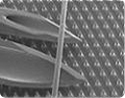
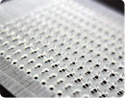
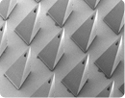
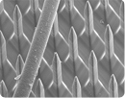
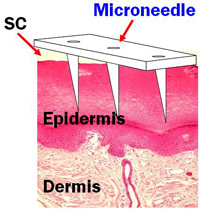
To be more effective in delivering drugs, the methods of destroying or transmitting the stratum cornuem have to be developed. In response to the needs, researches that elevated the effectiveness of drug delivery have been conducted using chemical enhancer, electric field, and ultrasound. Especially, the methods using microneedles are considered simple and effective. It creates holes in μm scale and can be transmitted to the epidermis (thickness: 50 - 100 μm) where there is no nerves. Even if the needle reaches the dermis layer with nerves, it causes little pain. |
The microneedle delivers drugs regardless of the molecular weight or the hydrophobic property of drugs as it makes micro holes in the stratum corneum. It is known through in vitro experiments that microneedles have 10,000 times better transmissibility of skin than the manual diffusion. It damages the skin less than other corneum removing methods using sand papers or tapes. A microneedle is a convenient drug delivery system as it causes no bigger pain than normal patches and it does not require any expertise to use. Just like any patch, the drug delivery system using microneedles prevents digestive organs or the liver from changing the drugs and helps maintain the amount of drugs in the plasma to stay in the body for a long time. Drug deliveries will become more effective in vaccine injection or allergy test because microneedles can control the depth of drug injection. |
In the epidermis, a large amount of Langerhans cells first recognize the pathogens in the body and induce effective immune reactions. Langerhans cells are known as 1,000 times more effective as other cells in inducing various immune reactions. Thus, langerhans cells are more effective target of vaccines and the microneedles are suitable for the purpose. The allergy reaction test examines the condition of skin after a certain period of time after applying allergy inducting material on the skin. In this case, if the needle is injected more than needed, inflammation will occur and make it difficult to discern corrective allergy reaction. In addition, injecting needle deeper than the epidermis will cause extreme pain to patients and the medical staff will find it hard to control intensity. The microneedle, injected only to the epidermis reduces those problems and shortens the duration of itchiness by reducing the amount of drug injected. |
Microneedle are used not only to deliver drugs but also to collect blood. When integrated with the micro total analysis system (micro-TAS), microneedles can help set up the portable Health Monitoring System (HMS) that checks out the blood with high amount of health index marker. The HMS enables the realization of portable diagnosis and treatment facility with the Drug Delivery Systems (DDS).
Once the skin gets firm and artificially damaged with a needle, collagen is broken and rearranged to soften the skin and recreate melanian pigment. This surgical operation will reduce the macro damage while increasing the micro stimulation when operated with microneedles. Thus, microneedles are more effective than tattoo guns or Nocor needles.
|
| |
|
|
| |
|
|